


As an Amazon Associate, Sumizeit earns from qualifying purchases.
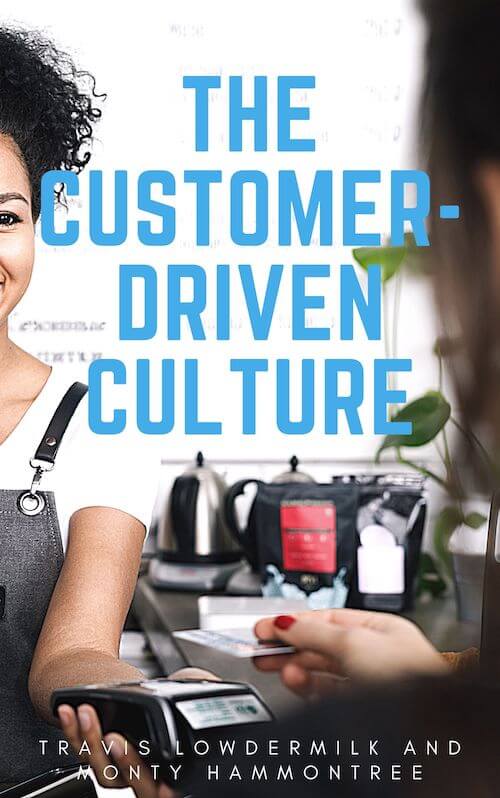
The Customer-Driven Culture Book Summary
This The Customer-Driven Culture Book Summary covers the key ideas, lessons, and takeaways in about 20 minutes.
Want the complete 20-minute summary?
- Full structured summary
- Video Summary
- Podcast Summary
- Audio summary
- Key takeaways
- Exercises
- Quiz
- Highlights and notes
- Ask the book with AI
What is in the The Customer-Driven Culture book summary?
Below is a preview of Sumizeit’s expert-written summary of The Customer-Driven Culture by Travis Lowdermilk and Monty Hammontree. The full summary covers the book’s key ideas in text, audio, and video.
In 2013, Microsoft was suffering from a bad reputation and a rigid corporate culture. When Microsoft’s third CEO Satya Nadella took over, he made the decision to transform Microsoft using a customer-centric focus. Using three main principles (“awareness, curiosity, and courage”) and six culture-transforming hacks, Nadella brought Microsoft back from the brink and made the Fortune 500 company more valuable than ever. These culture-transforming hacks include shifts in leadership development, data usage and management, communication, and learning from mistakes.
In 2013, Microsoft’s corporate culture was in the midst of a civil war.
In 2013, Microsoft’s global reputation was at an all-time low. Consumers and critics alike saw Microsoft as an evil, greedy corporation with no interest in providing for customers or meeting their needs. The company was an antiquated and grumpy vestige of the early days of tech - it was still a front-runner based on name recognition and assets alone.
Internally, Microsoft’s culture was equally abysmal. Different departments were at war with each other, competing for recognition and praise. The focus was on arbitrary accolades, rather than making a good product, and it showed.
As the new CEO, Satya Nadella focused on changing corporate culture by championing awareness, curiosity, and courage.
In 2013, the cultural transformation began. The effort was lead by new CEO Satya Nadella, and the Developer Divison (DevDiv), which was already embarking on a department-wide shift in principles when Nadella arrived. With Nadella’s arrival, a new question was posed to Microsoft management: “What culture do we want to foster?”
The focus on culture, rather than assets or products, was new for Microsoft. But Nadella was certain that culture would drive success. Nadella rewrote Microsoft’s mission statement with a focus on customer satisfaction. The new statement was simple: “Empower every person and every organization on the planet to achieve more.”
Because DevDiv was already working to transform workplace culture, they became the testing grounds for the new style of management. The focus was on learning, empathizing with customers, and collaboration.
In order to change Microsoft’s culture, Nadella focused on three main principles: awareness, curiosity, and courage. Developing a customer-driven culture means being aware of what products can do, quantifying and codifying their value, and testing for accuracy. It requires curiosity to try new things, and embrace the ideas of consumers. And finally, it takes courage. When experimenting with new products and shifting the paradigm of a 100,000 person workforce, mistakes will be made and projects will fail. Having the courage to try, fail, and try again is a pivotal part of a customer-driven culture.
But how did Nadella actually change the culture at Microsoft? Like software development, there are certain hacks managers can use to reduce strain while navigating cultural shifts at work. Lowdermilk and Hammontree, who witnessed the changes at Microsoft under Nadella, speak on the six hacks that he used to bring Microsoft back from the dead.
Culture Hack #1: Establish a common “language of learning”
Creating a common vocabulary for your employees to use…
Want the complete 20-minute summary?
- Full structured summary
- Video Summary
- Podcast Summary
- Audio summary
- Key takeaways
- Exercises
- Quiz
- Highlights and notes
- Ask the book with AI
Who should read The Customer-Driven Culture?
This book is essential for leaders, managers, and organizational executives who want to transform their company culture and align it with customer needs. Whether you're in tech or another industry, if you're struggling with internal silos, employee disengagement, or a disconnect from what customers actually want, this book offers a proven roadmap for change.
Why does The Customer-Driven Culture matter?
Culture transformation isn't a soft skill—it directly impacts profitability, innovation, and competitive advantage in today's market. The Customer-Driven Culture demonstrates how even massive, established organizations can reinvent themselves by putting customers at the center of everything they do, a lesson vital for companies facing disruption or decline.
What are the key themes in The Customer-Driven Culture?
- Shifting from internal competition to collaborative teamwork
- Building a learning-centered organizational vocabulary
- Leadership development as the foundation of cultural change
- Using customer stories and data to drive engagement
- Balancing vision with flexibility in cultural transformation
- Cultivating awareness, curiosity, and courage across all levels
What are the key lessons from the The Customer-Driven Culture book summary?
Culture drives competitive advantage more than assets alone
Microsoft's 2013 turnaround shows that reputation, brand loyalty, and innovation stem from internal culture first, not just product features or market position.
Define a shared language to align values and behavior
Introducing common terminology like 'hypothesis' and 'sense-making' creates a shared understanding of organizational values and speeds up cross-department collaboration.
Remove internal competition that distracts from customer focus
When departments compete for recognition rather than collaborate, products suffer and customers lose—breaking down silos redirects energy toward shared goals.
Encourage calculated risk-taking and learning from failure
Organizations that treat experiments and mistakes as learning opportunities rather than career-damaging events unlock innovation and employee engagement.
Leadership behavior cascades through the entire organization
Cultural change begins at the top—managers must model the respect, curiosity, and customer focus you want employees to adopt.
Invest time and attention in developing future leaders
Spotlighting promising talent and giving them access to senior leadership helps them internalize company culture and become agents of change.
Highlight good behavior instead of punishing bad behavior
Celebrating employees who embody customer focus creates positive role models and reduces resistance to cultural change.
Flexibility in implementation is as important as vision
Rigid, top-down mandates meet resistance—allowing teams to own how they implement customer-driven practices increases buy-in and discovery.
Data alone doesn't inspire action—stories do
Customer success stories told with emotional impact, concrete details, and unexpected twists move people far more than raw metrics and charts.
Measure cultural change through both quantitative and qualitative metrics
Effective measurement combines hard data with employee and customer feedback to ensure metrics reflect actual behavior change, not just numbers.
Awareness means understanding what your products actually do for customers
True customer focus requires staying grounded in how customers use and benefit from your work, not just technical specifications.
Curiosity drives innovation by opening the door to customer ideas
Organizations that genuinely listen to and experiment with customer suggestions discover unexpected solutions and build stronger loyalty.
Courage enables the difficult pivot from inward focus to outward focus
Transforming a large organization requires leaders to make uncomfortable decisions, admit past mistakes, and commit to sustained change.
Communication pathways between teams must be intentionally simplified
Removing bureaucratic barriers and encouraging direct dialogue between project managers, designers, and customers accelerates problem-solving and customer responsiveness.
A customer-driven culture attracts and retains engaged employees
Employees care more about their work and stay longer when they see their efforts directly improving customer outcomes.
Mission statements must reflect customer focus, not just corporate assets
Nadella's reframing of Microsoft's mission around empowering people—not dominating markets—gave employees a purpose-driven reason to show up daily.
Starting small with one department can test and refine cultural practices
Microsoft's Developer Division became a laboratory for cultural hacks, proving viability before scaling across the entire organization.
Regular polling and feedback loops catch cultural drift early
Monthly or quarterly surveys reveal how cultural shifts are actually landing on the ground, allowing leaders to adjust course before momentum is lost.
Celebrate milestones and transitions to reinforce cultural values
Using interviews, training, milestone celebrations, and even retirement ceremonies to highlight desired behaviors embeds culture into everyday organizational moments.
Customer loyalty and employee engagement are the true measures of success
Ultimately, a customer-driven culture is validated not by profits alone but by happier customers and more engaged employees who feel their work matters.
Want the complete 20-minute summary?
- Full structured summary
- Video Summary
- Podcast Summary
- Audio summary
- Key takeaways
- Exercises
- Quiz
- Highlights and notes
- Ask the book with AI
How can you apply ideas from The Customer-Driven Culture?
- Audit your current organizational vocabulary—create a shared glossary of values-driven terms that employees can use to discuss projects and decisions
- Map internal dependencies and communication barriers, then redesign workflows to reduce silos and encourage cross-functional collaboration
- Launch a pilot 'culture hack' in one department before rolling it out company-wide, collecting feedback to refine your approach
- Establish a leadership development program that pairs promising employees with senior leaders, giving them visibility into company culture
- Create a customer success story program where teams regularly collect and share customer experiences with emotional narrative, not just data
- Introduce 'learning questions' into meetings and performance reviews to normalize curiosity, hypothesis testing, and constructive failure analysis
- Design a recognition system that celebrates employees who demonstrate customer focus and collaboration, making them visible role models
What common mistakes do readers make with The Customer-Driven Culture?
- Assuming data and metrics alone will motivate employees—without a human narrative, numbers feel abstract and disconnected from impact
- Implementing cultural change top-down without flexibility—rigid mandates create resistance instead of ownership at team level
- Failing to align leadership behavior with stated cultural values—if leaders don't model what they preach, employees won't trust the change
- Neglecting to measure cultural progress regularly—without quarterly feedback loops, organizations drift back to old patterns without realizing it
Sumizeit Exercises Apply what you've learned
Turn ideas from The Customer-Driven Culture into action with a short guided reflection: identify the biggest takeaway, connect it to your life, and commit to one step you can take in the next 24 hours.
What is the expert analysis of The Customer-Driven Culture?
Overview
The Customer-Driven Culture: A Microsoft Story is authored by Travis Lowdermilk and Monty Hammontree, both seasoned professionals embedded within Microsoft’s user experience and research divisions. This work stands out as a rare insider’s chronicle of cultural transformation within one of the world’s largest technology corporations. It captures a pivotal moment when Microsoft, under Satya Nadella’s leadership, pivoted from internal fragmentation and external criticism to renewed innovation and customer-centricity. The book’s significance lies in its detailed articulation of cultural change strategies that are both pragmatic and rooted in lived corporate experience, offering a blueprint for organizations seeking to realign their culture around customer value.
Core Thesis
The central argument advanced by Lowdermilk and Hammontree is that sustainable corporate success hinges on cultivating a customer-driven culture, which requires deliberate shifts in mindset and organizational behavior. Through Satya Nadella’s leadership, Microsoft embraced three core principles—awareness, curiosity, and courage—that collectively foster an environment conducive to learning, collaboration, and risk-taking. The authors propose six actionable “culture hacks” that operationalize these principles, emphasizing common language, teamwork over competition, continuous learning, leadership investment, flexibility, and storytelling through data. The thesis underscores that culture is not a peripheral concern but the foundational driver of innovation, employee engagement, and customer satisfaction.
Strengths
- Insider Perspective: The authors’ direct involvement with Microsoft lends authenticity and depth to their analysis, moving beyond abstract theory to concrete, observed practices.
- Clarity and Practicality: The articulation of three guiding principles and six culture hacks provides a clear, actionable framework that managers can adapt and implement.
- Holistic Approach: The book integrates psychological insights about learning and motivation with organizational behavior, leadership development, and data-driven storytelling, reflecting a multidisciplinary understanding.
- Emphasis on Language and Narrative: Highlighting the role of shared vocabulary and customer success stories as cultural tools is a nuanced contribution that connects communication theory with corporate culture change.
- Focus on Leadership as Culture Catalyst: The recognition that culture emanates from leadership behavior and investment in emerging leaders aligns with contemporary leadership scholarship.
Critiques & Counterarguments
- Potential Overemphasis on Leadership Heroism: While Nadella’s role is undeniably pivotal, the narrative risks attributing cultural transformation too heavily to a single leader, potentially underplaying systemic factors and the contributions of broader employee cohorts.
- Limited Critical Engagement with Failures: The book celebrates successes but offers scant reflection on ongoing challenges or initiatives that failed, which could provide a more balanced and instructive account.
- Risk of Oversimplification: The “culture hacks” framework, while accessible, may understate the complexity and time-intensive nature of cultural change in large, entrenched organizations.
- Competing Research on Culture Change: Academic literature often emphasizes that culture is deeply embedded and resistant to top-down change; some scholars argue that structural incentives and external market pressures play a more decisive role than internal cultural narratives alone.
- Data and Storytelling Balance: The reliance on storytelling to communicate data impact may clash with organizations where empirical rigor and quantitative metrics are prioritized over narrative, potentially limiting cross-organizational applicability.
Who Should Read This
This book is ideal for senior executives, organizational development professionals, and managers seeking to understand how to orchestrate meaningful cultural change within large, complex enterprises. It will also appeal to scholars and practitioners interested in the intersection of leadership, organizational psychology, and customer experience management. Readers looking for a case study grounded in real-world corporate transformation, enriched by practical tools and leadership insights, will find this work particularly valuable. However, those expecting a purely academic or critical examination may find the tone somewhat celebratory and prescriptive.
Frequently asked questions about the The Customer-Driven Culture book summary
What is The Customer-Driven Culture about?
The Customer-Driven Culture: A Microsoft Story by Travis Lowdermilk and Monty Hammontree examines how CEO Satya Nadella transformed Microsoft's failing internal culture and damaged reputation between 2013 and beyond. The book outlines six practical 'culture hacks' and three foundational principles—awareness, curiosity, and courage—that leaders can use to align their organizations around customer needs and rebuild workplace engagement.
Who should read The Customer-Driven Culture?
This book is ideal for executives, managers, and organizational leaders who want to shift their company from internal competition to customer-focused collaboration. It's especially valuable for leaders in tech, but the lessons apply to any industry where internal silos, low employee engagement, or poor customer reputation is holding the organization back.
What are the main takeaways from The Customer-Driven Culture?
The main takeaways include: (1) culture is more valuable than assets in driving competitive advantage, (2) establishing shared language and removing silos accelerates collaboration, (3) leadership must model the behaviors you want to see, (4) customer stories are more powerful than raw data in driving engagement, and (5) sustainable cultural change requires awareness of customer needs, curiosity about new ideas, and courage to fail and adapt.
What are the six culture hacks mentioned in the book?
The six culture hacks are: establishing a common language of learning, promoting teamwork over internal competition, encouraging employees to learn from mistakes, investing in leadership development, staying flexible in your approach, and using customer success stories to illustrate impact. Each hack addresses a specific barrier to customer-driven culture that Microsoft overcame.
How can I measure cultural change in my organization?
The book recommends using both quantitative metrics (surveys, engagement scores) and qualitative feedback (customer interviews, employee stories) to track progress. Ask regularly whether your data reflects the actual cultural shifts you want to see, and adjust your measurement approach monthly or quarterly to catch drifts early.
What did Microsoft's culture look like before the transformation?
Before Nadella arrived in 2013, Microsoft's culture was marked by internal departmental warfare, competition for recognition over product quality, and a reputation as an outdated, greedy corporation indifferent to customer needs. Employees were focused on individual accolades rather than delivering customer value.
Can these culture hacks work for small businesses or startups?
Yes, the principles scale well. Small organizations can start with a shared vocabulary and leadership clarity, then expand to cross-functional collaboration and customer storytelling as they grow. In fact, smaller teams often find it easier to pilot culture changes and iterate faster than large enterprises.
About Sumizeit
Sumizeit is a profitable Scomy LLC company based in Miami, Florida. It has been helping readers learn from nonfiction books for 7 years with expert-written summaries in text, audio, podcast, and video.
Want the complete 20-minute summary?
- Full structured summary
- Video Summary
- Podcast Summary
- Audio summary
- Key takeaways
- Exercises
- Quiz
- Highlights and notes
- Ask the book with AI
Here's why readers love Sumizeit
Join thousands of learners getting smarter every day
"Great experience. Detailed summaries. Loved the gamification feature. Makes learning fun. Good customer service. I recommend Sumizeit to anyone. You'll learn a lot."
"I always felt busy but still wanting to keep up with the book discussion in my friend group. This was a great supplement to help me keep reading the books I find fun while keeping up with important books."
"I love this website. Instead of scrolling social media, I find myself learning a lot. I use it everyday. I recommend this app for anyone who is too busy and wants to get up to speed with their favorite books."
The Customer-Driven Culture Book Summary PDF
Looking for a The Customer-Driven Culture Book Summary PDF you can save and revisit offline? Our The Customer-Driven Culture Book Summary PDF captures the book’s core ideas in a clean, printable format — the key frameworks, takeaways, and structure without the fluff. Download the The Customer-Driven Culture Book Summary PDF when you want a reference you can annotate, share with your team, or review on the go. Get your The Customer-Driven Culture Book Summary PDF from the download page below.
Download The Customer-Driven Culture Book Summary PDFPeople also liked these summaries
Readers who explored The Customer-Driven Culture often enjoyed these titles next.


Want the complete 20-minute summary?
- Full structured summary
- Video Summary
- Podcast Summary
- Audio summary
- Key takeaways
- Exercises
- Quiz
- Highlights and notes
- Ask the book with AI
Featured Book Titles
Popular Book Summaries at sumizeit, leading book summary app
