Question 1 of 5
According to the summary, by how much did the number of remote workers increase between 2003 and 2011?
The summary states that the number of remote workers rose 73 percent from 2003 to 2011.


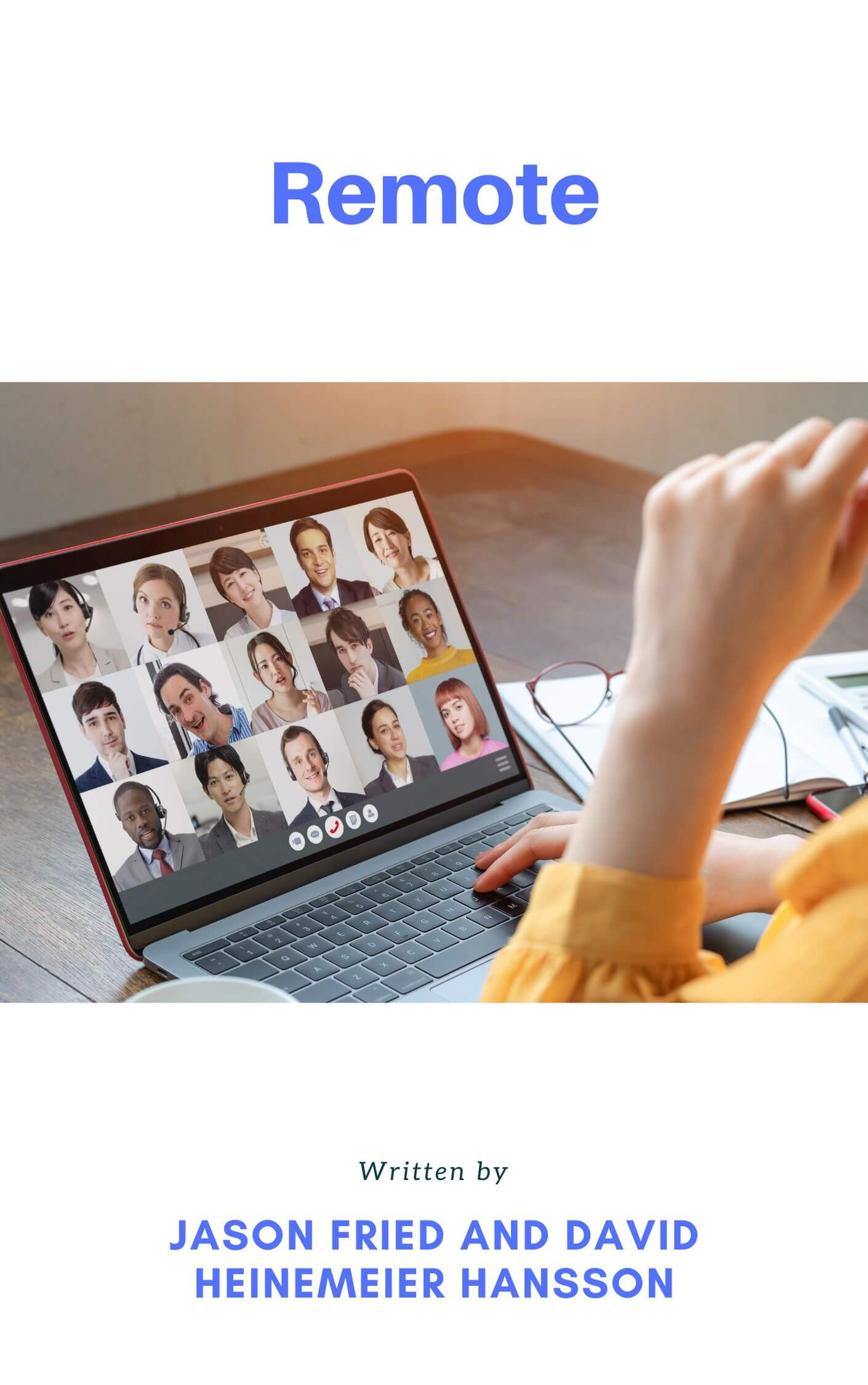
Prefer the print book? Buy on Amazon
As an Amazon Associate, Sumizeit earns from qualifying purchases.
This Remote Book Summary covers the key ideas, lessons, and takeaways in about 20 minutes.
Want a Free Weekly Read?
Get a free summary every week straight to your mailbox.
Below is a preview of Sumizeit’s comprehensive human-written summary of Remote by Jason Fried,David Heinemeier Hansson. The full summary is 15-20 minutes long and covers the book’s key ideas in text, audio, visual, and video formats. Unlock the full 20 Minute Summary
Remote work is on the rise, and it is a benefit that companies should embrace. The internet and new technology have enabled workers to collaborate and work from anywhere in the world. Tax law in the United States also does not penalize workers for working remotely from anywhere in the country. Thanks to these new developments, the number of remote workers had risen 73 percent in the years from 2003 to 2011.
Companies that embrace remote work have the advantage of recruiting competitive employees from anywhere in the world and improve the satisfaction, wellness, and productivity of current employees. Remote work is a benefit that can help companies attract the most competitive talent.
However, despite the rise in popularity of remote work, Yahoo made the controversial decision to end its remote work program in February of 2013. This is because in many companies, the corporate mindset has not caught up to new technological developments, and many company leaders are still stuck in the traditional office tradition. It is hard for these industry leaders to see the benefits of remote work and break out of the normal 9 to 5 schedule. However, industry leaders will have to embrace the advantages of remote work, in order to attract the best talent to their companies and improve employee happiness and productivity.
Employers should openly assess the pros and cons of developing a remote work culture and will have to address the challenges of employee motivation and the cultivation of company culture with remote employees. However, companies that are able to address these challenges and take advantage of the benefits of a remote workforce will be ahead of the curve. Companies with a remote work culture will be able to attract top employees and increase productivity, while the traditional office set up will become outdated and unattractive to competitive candidates.
Most workers don’t do their best work at the office, because the amount of distractions in the average workplace makes it difficult for employees to be productive. Meetings and calls break up the workday into short segments, which makes it difficult for workers to devote long periods of time to concentrate on deep work. For workers to do good creative work, they need long periods of time, free from distraction, to get into a flow state and produce good, creative work. Remote work allows workers to set up their day so they can eliminate distractions and create a workspace that encourages concentration and creative work. Remote work also allows employees to restructure their schedules in the most efficient way for them. Some people feel more productive in the morning, while others are night owls. Others have other obligations, such as doing chores or dealing with childcare. Outside of a traditional 9 to 5 office space, workers can set up a schedule that is most productive for them.
In most workplaces, employees are aware of the risk of interrupting their colleagues and creating unnecessary distractions.
Remote by Jason Fried and David Heinemeier Hansson is ideal for business leaders, managers, and entrepreneurs who want to attract top talent and improve employee satisfaction. It's also valuable for employees curious about whether remote work could enhance their productivity and quality of life, as well as HR professionals designing flexible work policies.
As companies increasingly compete for skilled workers across geographic boundaries, understanding remote work's advantages has become essential for staying competitive. The book challenges outdated office-centric thinking and shows how distributed teams can actually boost productivity, reduce costs, and expand talent pools—making it crucial reading in today's workplace evolution.
Turn ideas from Remote into action with a short guided reflection: identify the biggest takeaway, connect it to your life, and commit to one step you can take in the next 24 hours.
Remote: Office Not Required is a seminal work by Jason Fried and David Heinemeier Hansson, co-founders of the influential software company Basecamp. Both authors bring a unique blend of entrepreneurial experience and technological insight, having pioneered remote work practices within their own organization long before it became mainstream. This book is significant for its timely and persuasive advocacy of remote work, challenging entrenched corporate norms and offering a comprehensive framework for businesses navigating the evolving landscape of work in the digital age.
The central argument of Remote is that modern technology has irrevocably transformed the nature of work, rendering traditional office-centric models obsolete. Fried and Hansson contend that remote work is not only feasible but advantageous, enabling companies to tap into a global talent pool, enhance employee satisfaction, and boost productivity. They argue that the myths surrounding remote work—such as concerns about productivity, collaboration, and security—are largely unfounded and stem from outdated managerial mindsets. The authors advocate for a deliberate cultural shift that embraces flexibility, trust, and autonomy as pillars of a successful remote work environment.
Remote is essential reading for business leaders, HR professionals, and organizational strategists seeking to understand and implement remote work effectively. It offers valuable insights for entrepreneurs and startup founders aiming to build flexible, resilient companies. Additionally, policymakers and scholars interested in the future of work will find its arguments thought-provoking, though they should supplement it with broader empirical research. Finally, employees contemplating or currently engaged in remote work will appreciate its practical advice on maximizing productivity and well-being outside the traditional office environment.
Try a few questions from the Remote quiz. Unlock the full summary for the full quiz and answers that will help the ideas stick.
Question 1 of 5
The summary states that the number of remote workers rose 73 percent from 2003 to 2011.
Question 2 of 5
The summary specifically notes that Yahoo ended its remote work program in February of 2013.
Question 3 of 5
The summary explains companies that embrace remote work can recruit competitive employees from anywhere in the world, improving talent acquisition.
Question 4 of 5
The summary states offices have many distractions, with meetings and calls breaking up the day and preventing long uninterrupted periods needed for creative work.
Question 5 of 5
The summary lists negative effects of long commutes, including increased anxiety, higher rates of obesity, neck and back pain, insomnia, and depression.
Remote: Office Not Required by Jason Fried and David Heinemeier Hansson argues that modern technology has made distributed work not only possible but advantageous for companies and employees. The book challenges the traditional office model, demonstrating how remote work increases productivity, reduces costs, enables global talent recruitment, and improves employee satisfaction and wellness.
Remote is essential for business leaders, managers, and entrepreneurs considering flexible work policies, as well as HR professionals designing modern workplace structures. It's also valuable for employees exploring whether remote work fits their needs and for anyone questioning whether the traditional office model truly maximizes productivity.
The key takeaways include: most productive work requires distraction-free environments unavailable in typical offices; remote hiring expands talent pools beyond expensive urban centers; trust and results-based management outperform surveillance culture; distributed teams reduce operational risk and real estate costs; and early adopters of remote work gain competitive advantages in attracting and retaining top talent. Companies must address challenges like employee wellness and security through proper policies rather than rejecting remote work entirely.
Remote advocates for flexible options rather than mandating one approach. The book supports hybrid models where companies allow employees some remote days, occasional in-person meetings for connection, and gradually transition teams rather than eliminating offices entirely. The key is trusting employees and measuring results rather than enforcing office attendance.
Remote argues that company culture transfers well when teams transition together and communication becomes intentional and asynchronous. The book recommends replacing constant in-person interactions with structured email updates and reserving in-person meetings for special occasions, which actually strengthens culture by making connection feel valuable rather than obligatory.
Remote outlines significant cost savings from reduced office space (IBM saved $2 billion), lower overhead, and the ability to avoid overpaying for talent concentrated in expensive cities. Beyond direct savings, companies gain resilience through distributed operations and competitive recruiting advantages that reduce turnover costs and improve workforce quality.
Yes, Remote discusses challenges including employee burnout, maintaining wellness, preventing isolation, and establishing clear communication. The book emphasizes that success requires intentional management practices like structured routines, ergonomic workspace support, wellness programs, asynchronous communication protocols, and treating remote workers identically to office employees.
Sumizeit is a profitable Scomy LLC company based in Miami, Florida. It has been helping readers learn from nonfiction books for 7 years with expert-written summaries in text, audio, podcast, and video.
Join thousands of learners getting smarter every day
"Great experience. Detailed summaries. Loved the gamification feature. Makes learning fun. Good customer service. I recommend Sumizeit to anyone. You'll learn a lot."
"I always felt busy but still wanting to keep up with the book discussion in my friend group. This was a great supplement to help me keep reading the books I find fun while keeping up with important books."
"I love this website. Instead of scrolling social media, I find myself learning a lot. I use it everyday. I recommend this app for anyone who is too busy and wants to get up to speed with their favorite books."
Looking for a Remote Book Summary PDF you can save and revisit offline? Our Remote Book Summary PDF captures the book’s core ideas in a clean, printable format — the key frameworks, takeaways, and structure without the fluff. Download the Remote Book Summary PDF when you want a reference you can annotate, share with your team, or review on the go. Get your Remote Book Summary PDF from the download page below.
Download Remote Book Summary PDFReaders who explored Remote often enjoyed these titles next.
Popular Book Summaries at sumizeit, leading book summary app