

Prefer the print book? Buy on Amazon
As an Amazon Associate, Sumizeit earns from qualifying purchases.
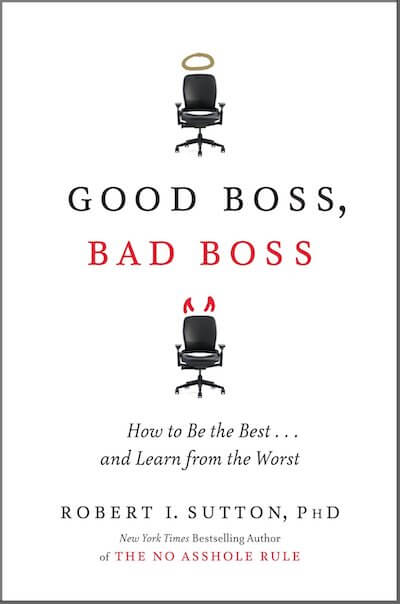
Good Boss, Bad Boss Book Summary
This Good Boss, Bad Boss Book Summary covers the key ideas, lessons, and takeaways in about 20 minutes.
Short Description:
Good Boss Bad Boss teaches leadership lessons from others’ successes and failures.
Helps with these goals
Want a Free Weekly Read?
Get a free summary every week straight to your mailbox.
Preview the Good Boss, Bad Boss book summary
Below is a preview of Sumizeit’s comprehensive human-written summary of Good Boss, Bad Boss by Robert I. Sutton. The full summary is 15-20 minutes long and covers the book’s key ideas in text, audio, visual, and video formats. Unlock the full 20 Minute Summary
Learning from your own mistakes is important, but learning from the mistakes of others is just as important. Just ask the COO of an unnamed firm who loudly announced on the subway a list of attorneys who he was going to fire. Unbeknownst to him, a passenger heard him and wrote a blog post naming all of the attorneys he had loudly fired off. Bet he wishes he had been warned! While his mistakes cost him his job, they can prevent you from losing yours.
Good Boss Bad Boss talks about how to learn from the mistakes and successes of other bosses in order to improve your own performance. Because let's face it: sometimes being the best boss means you need to learn from the worst.
Being rude comes with a price tag
In a business meeting, the CEO was being loud and rude, talking over everyone and refusing to engage any dissenting opinions. Everyone in the room was glad to say negative things about him behind his back and complained about his poor leadership abilities. However, once the CEO left the room, the next most powerful person, the CFO, began acting in exactly the same way. What gives?! Upper management sets the tone for lower management, and the way the CEO acts has a trickle-down effect. The solution? Engage in a constructive conflict strategy. That means allowing conflicts to arise, while also not putting yourself above any of your employees. This style has many benefits. Research shows that CEOs who engage in constructive conflict make better decisions because they are open to the opinions and ideas of others. You’ll also prevent that nasty trickle-down effect and improve the tactics of those who work below you. If you chose a constructive conflict-oriented management strategy, you’re in good company. Abraham Lincoln was also a fan of this: he had his top three opponents and critics in his cabinet after winning the election.
Don't crush the bird
Imagine holding a bird in the palm of your hand. If you hold it too tightly, the bird is crushed. If you hold it too loosely, the bird escapes. This is exactly how you should manage: strike a balance between being aloof and micromanaging, two methods which can lead to problematic outcomes. If you’re too assertive, you will damage relationships. If you are not assertive enough, people will not be pressed to follow through on goals. Moderately assertive bosses were rated most effective by MBA students.
Micromanagers often believe they are creating more successful outcomes, but research shows they don’t. Think of it like being a doctor at the birth of a baby: your job is not to be a parent, your job is simply to be present and correct an issue if it comes up.
Grit gets you there
Grit, a term coined by Angela Duckworth, is “perseverance and passion towards long term goals” that does not subside, regardless of failure or adversity.
Want the complete 20-minute summary?
- Full structured summary
- Video Summary
- Podcast Summary
- Audio summary
- Key takeaways
- Exercises
- Quiz
- Highlights and notes
- Ask the book with AI
Who should read Good Boss, Bad Boss?
Good Boss, Bad Boss is essential reading for anyone in a leadership or management role, from first-time supervisors to seasoned executives. Whether you're struggling with team dynamics, decision-making, or your own management style, this book offers practical guidance grounded in research and real-world examples. It's also valuable for aspiring leaders who want to learn from others' mistakes before stepping into positions of authority.
Why does Good Boss, Bad Boss matter?
Effective leadership directly impacts organizational performance, employee retention, and workplace culture—yet many managers lack formal training in how to lead. Robert I. Sutton's Good Boss, Bad Boss cuts through management theory to show what actually works by examining both successful and failed leadership approaches. In today's competitive talent market, the difference between a good boss and a bad boss can determine whether your best people stay or leave.
What are the key themes in Good Boss, Bad Boss?
- The cascading impact of leadership behavior on organizational culture
- Finding balance between micromanagement and detachment
- Building psychological safety to encourage innovation and contribution
- Taking responsibility and giving credit as a leadership paradox
- Self-awareness and vulnerability as core leadership competencies
- Toxic behavior's disproportionate impact on team performance
- Bridging the gap between knowing and doing
How can you apply ideas from Good Boss, Bad Boss?
- Hold team meetings where you actively solicit and genuinely consider dissenting viewpoints before making decisions
- Assess your management style against the bird-in-hand principle and adjust your approach if you're too hands-off or too controlling
- Break down your team's next major project into smaller milestones and present them as achievable stepping stones rather than one overwhelming goal
- Conduct a 360-degree assessment or ask trusted colleagues how others experience working with you, focusing on your mood, tone, and availability
- Create a hiring scorecard that weights cultural fit and collaborative behavior equally with technical skills, and use it consistently
- During your next all-hands meeting or team gathering, give specific credit to team members and share a mistake you made and what you learned
- Set a 15-minute timer in your calendar meetings and end early if the agenda is complete—model respect for people's time
- Identify the energizers on your team who quietly lift others up, and find ways to include them in cross-functional projects and leadership opportunities
What common mistakes do readers make with Good Boss, Bad Boss?
- Assuming that because someone is technically brilliant, they can manage others effectively—talent and management capability are different skills
- Using meetings as a power grab or to demonstrate authority rather than to solve problems or make decisions efficiently
- Believing that being tough and dismissive of dissent shows strong leadership, when research shows it actually reduces decision quality and creates toxic culture
- Tolerating toxic but high-performing individuals too long, underestimating the corrosive effect they have on team morale and overall results
- Creating decision-making opportunities or planning sessions where employees realize afterward that their input never actually mattered
- Failing to take responsibility for failures and instead deflecting blame, which undermines trust and prevents organizational learning
Sumizeit Exercises Apply what you've learned
Turn ideas from Good Boss, Bad Boss into action with a short guided reflection: identify the biggest takeaway, connect it to your life, and commit to one step you can take in the next 24 hours.
What is the expert analysis of Good Boss, Bad Boss?
Overview
Good Boss, Bad Boss is authored by Robert I. Sutton, a distinguished professor of management science at Stanford University and a leading figure in evidence-based management. Sutton’s expertise bridges academia and practical leadership, making this work a significant contribution to the literature on organizational behavior and leadership. The book stands out for its pragmatic approach to leadership, combining rigorous research with vivid real-world anecdotes to illuminate what separates effective bosses from ineffective ones. Sutton’s dual role as a scholar and consultant enriches the text, providing both theoretical grounding and actionable insights.
Core Thesis
The central argument of Good Boss, Bad Boss is that leadership effectiveness hinges on learning not only from one’s own experiences but critically from the successes and failures of others. Sutton contends that the best bosses consciously cultivate self-awareness, manage interpersonal dynamics with balance, and foster environments where constructive conflict and psychological safety thrive. The book emphasizes that leadership is less about innate traits and more about deliberate behaviors—such as giving credit, taking blame, managing conflict constructively, and avoiding toxic dynamics—that can be learned and refined over time.
Strengths
- Evidence-Based Approach: Sutton grounds his advice in empirical research, linking leadership behaviors to measurable outcomes such as employee loyalty, decision quality, and organizational performance.
- Practical Wisdom: The use of vivid case studies—ranging from corporate CEOs to military leaders—provides relatable, memorable illustrations that bridge theory and practice.
- Balanced Leadership Model: The metaphor of “not crushing the bird” captures the delicate balance between assertiveness and autonomy, highlighting the nuanced interpersonal skills required for effective management.
- Focus on Psychological Safety: The book underscores the importance of creating environments where employees feel safe to contribute ideas and dissent, a concept increasingly validated by contemporary organizational psychology.
- Actionable Takeaways: Sutton offers concrete strategies such as “fake it until you make it,” “small wins,” and “watch yourself” that leaders can immediately implement to improve their effectiveness.
Critiques & Counterarguments
- Potential Oversimplification: While Sutton’s behavioral prescriptions are compelling, the book occasionally risks oversimplifying complex organizational dynamics by focusing heavily on individual leader behaviors without fully addressing systemic or cultural factors that constrain leadership effectiveness.
- Limited Consideration of Power Structures: The analysis tends to assume a relatively egalitarian organizational context, whereas in many hierarchical or politicized environments, even the best bosses may struggle to enact change due to entrenched power dynamics.
- Competing Research on Leadership Traits: Some leadership scholars argue that innate personality traits and emotional intelligence play a more decisive role than Sutton acknowledges, suggesting that not all leadership behaviors can be learned or faked effectively.
- Questioning the “Fake It Until You Make It” Strategy: Critics caution that this approach may encourage inauthenticity, potentially eroding trust if leaders are perceived as disingenuous or inconsistent.
- Real-World Variability: The book’s examples, while illustrative, are largely drawn from Western corporate and military contexts, which may limit applicability in diverse cultural or organizational settings where leadership norms differ substantially.
Who Should Read This
Good Boss, Bad Boss is ideally suited for current and aspiring leaders across sectors who seek a grounded, research-informed guide to improving their leadership effectiveness. It will particularly benefit managers navigating complex interpersonal dynamics and those interested in cultivating a positive organizational culture. Scholars and students of organizational behavior will find Sutton’s synthesis of evidence and practice insightful, while HR professionals and leadership coaches can leverage its frameworks to develop training and development programs. The book’s accessible style also makes it a valuable read for anyone interested in understanding the human side of leadership beyond abstract theories.
Frequently asked questions about the Good Boss, Bad Boss book summary
What is Good Boss, Bad Boss about?
Good Boss, Bad Boss by Robert I. Sutton is a management book that teaches leaders how to improve their effectiveness by learning from both the successes and failures of other bosses. The book combines research-based insights with real-world examples to show what actually works in leadership, covering topics like building psychological safety, managing conflict constructively, taking responsibility, and avoiding toxic behaviors.
Who should read Good Boss, Bad Boss?
Good Boss, Bad Boss is essential for anyone in a leadership or management position, from new supervisors to C-suite executives. It's also valuable for aspiring leaders, HR professionals, and anyone who wants to understand what makes leadership effective. If you've experienced poor management or want to avoid making common leadership mistakes, this book provides actionable guidance.
What are the main takeaways from Good Boss, Bad Boss?
The main takeaways include: leadership behavior cascades through an organization, find balance between micromanagement and detachment, welcome constructive conflict to improve decisions, build psychological safety for innovation, give credit generously while taking responsibility for failures, and develop acute self-awareness about how others experience working with you. Ultimately, being a good boss depends on understanding yourself and your impact on others.
How does Sutton define a good boss versus a bad boss?
Sutton defines good bosses as leaders who welcome dissent, take responsibility for failures, give credit to their teams, protect employee time and focus, and continuously monitor their own behavior and impact. Bad bosses are dismissive of others' ideas, deflect blame, micromanage or remain aloof, tolerate toxic behavior, and lack self-awareness about how they're experienced by their teams.
What is the knowing-doing gap and how do you close it?
The knowing-doing gap is the widespread problem where organizations identify what needs to be done but never actually implement it. Sutton recommends closing this gap by giving decision-making authority to those who know the most about the problem, understanding the work you're doing in a meaningful way, and creating accountability structures that translate knowledge into action.
What does Sutton say about toxic employees?
Sutton emphasizes that one toxic employee—someone who is talented but unwilling to work cooperatively—corrodes team performance far more than their individual contribution improves it. He recommends hiring and promoting people with a track record of cooperative behavior, rewarding high performers who also help others, and removing toxic employees quickly if persistent feedback doesn't change their behavior.
How should a boss handle mistakes and failures?
According to Good Boss, Bad Boss, effective bosses take full responsibility for mistakes without sugarcoating, apologize sincerely, explain what they learned, and describe what they would do differently next time. This approach demonstrates accountability and builds trust faster than deflecting blame, and it shows the team that you have the capacity to solve problems and won't repeat the same mistakes.
What is the bird-in-hand principle?
The bird-in-hand principle is a metaphor for management balance: hold a bird too tightly and you crush it, hold it too loosely and it escapes. Applied to management, this means finding the middle ground between being too detached and micromanaging. Research shows that moderately assertive bosses are rated most effective—present enough to guide and correct, but not so controlling that you damage relationships or prevent your team from developing.
About Sumizeit
Sumizeit is a profitable Scomy LLC company based in Miami, Florida. Our founders, Clemens Raemy and Weina Scott, are successful entrepreneurs with several exits. Sumizeit is a popular book summary app / micro learning app used by busy professionals and entrepreneurs with over 2,500 non-fiction book summaries and 10,000 podcast summaries in text, audio, visual, podcast, and video format. We also have stellar retention tools to make ideas stick - such as flashcards with spaced repetition, quizzes, streaks, highlighting and notes, daily challenges, riddles, mini-courses, meditation, and more. You won't only learn the idea, but also remember it. Over 90% of our users change their habits with Sumizeit.
Upgrade Now
Here's why readers love Sumizeit
Join thousands of learners getting smarter every day
"Great experience. Detailed summaries. Loved the gamification feature. Makes learning fun. Good customer service. I recommend Sumizeit to anyone. You'll learn a lot."
"I always felt busy but still wanting to keep up with the book discussion in my friend group. This was a great supplement to help me keep reading the books I find fun while keeping up with important books."
"I love this website. Instead of scrolling social media, I find myself learning a lot. I use it everyday. I recommend this app for anyone who is too busy and wants to get up to speed with their favorite books."
Good Boss, Bad Boss Book Summary PDF
Looking for a Good Boss, Bad Boss Book Summary PDF you can save and revisit offline? Our Good Boss, Bad Boss Book Summary PDF captures the book’s core ideas in a clean, printable format — the key frameworks, takeaways, and structure without the fluff. Download the Good Boss, Bad Boss Book Summary PDF when you want a reference you can annotate, share with your team, or review on the go. Get your Good Boss, Bad Boss Book Summary PDF from the download page below.
Download Good Boss, Bad Boss Book Summary PDFPeople also liked these summaries
Readers who explored Good Boss, Bad Boss often enjoyed these titles next.

Ready to read the whole thing?
- Full structured summary
- Video Summary
- Podcast Summary
- Audio summary
- Key takeaways
- Exercises
- Quiz
- Highlights and notes
- Ask the book with AI
Featured Book Titles
Popular Book Summaries at sumizeit, leading book summary app