


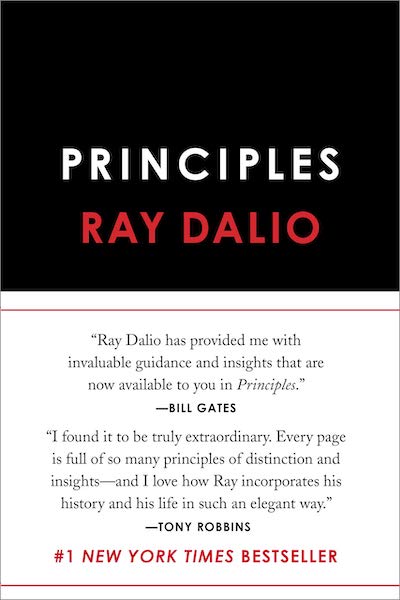
Prefer the print book? Buy on Amazon
As an Amazon Associate, Sumizeit earns from qualifying purchases.
Principles: Life and Work Book Summary
This Principles: Life and Work Book Summary covers the key ideas, lessons, and takeaways in about 20 minutes.
Short Description:
Principles shares Dalio’s life and work rules for growth and success.
Helps with these goals
Want a Free Weekly Read?
Get a free summary every week straight to your mailbox.
Preview the Principles: Life and Work book summary
Below is a preview of Sumizeit’s comprehensive human-written summary of Principles: Life and Work by Ray Dalio. The full summary is 15-20 minutes long and covers the book’s key ideas in text, audio, visual, and video formats. Unlock the full 20 Minute Summary
Principles blends Ray Dalio’s personal story with a practical blueprint for effective decision-making and leadership. Dalio founded Bridgewater Associates out of a small New York apartment in 1975 and eventually built it into the world’s largest hedge fund. His most formative experience came in 1982, when he publicly predicted that the U.S. economy was on the verge of collapse. He was wrong, lost almost everything, had to fire his staff, and ended up borrowing money from his father just to survive. The humiliation shattered his confidence but became the foundation of his growth. Instead of quitting, Dalio analyzed why he failed and began documenting principles that would help him avoid emotional, ego-driven decisions. Those principles later guided Bridgewater to decades of record-breaking performance and global influence.
Why Principles Matter
Dalio argues that most people act impulsively when they face difficult decisions, guided by fear, ego, or habit rather than logic. Without principles, life becomes chaotic and repetitive because people respond to each new situation as if they’ve never encountered anything similar before. Principles act as a structured operating system for navigating challenges, preventing emotional reactions from sabotaging progress. With principles, decisions become consistent and objective, and problems become solvable through systematic thinking.
Dalio compares principles to a pilot’s instrument panel: when storms or disorientation strike, instruments—not feelings—keep the plane on course. Likewise, principles allow individuals and organizations to rely on proven frameworks instead of unreliable intuition.
Relentlessly Confront Reality
Dalio believes that success begins with accepting the world exactly as it is, not as we wish it to be. People often avoid uncomfortable truths because they feel threatening. Instead of wishing circumstances were different, Dalio advises confronting challenges directly and treating painful moments as opportunities for learning.
His core formula reflects this mindset:
Pain + Reflection = Progress
An example from Bridgewater illustrates this: after losing a major client due to unclear communication and slow responses, Dalio didn’t blame individuals. Instead, the team publicly reviewed what went wrong, discovered the absence of clear responsibility, and rebuilt the communication system from scratch. The result was stronger processes and improved client outcomes.
Dalio argues that most people stop at pain, but growth requires reflection.
Understanding Ego and Blind Spots
Ego blocks learning by making us defensive, overly confident, or unwilling to acknowledge weakness. Blind spots distort perception, causing people to believe they are right even when they lack full information. Dalio explains that confronting one’s own ego is essential for gaining true insight.
At Bridgewater, employees openly evaluate leaders, including Dalio, sometimes scoring him low on listening or clarity. Instead of reacting defensively, Dalio reviews recordings and adjusts his behavior based on evidence. He stresses that those who cannot separate themselves from their ego cannot evolve.
Dalio reminds readers that two intelligent people can disagree simply because their brains are wired differently. Understanding this prevents unnecessary conflict and encourages curiosity instead of defensiveness.
Radical Open-Mindedness and Radical Transparency
Dalio says breakthroughs occur when people are willing to challenge their own thinking.
Want the complete 20-minute summary?
- Full structured summary
- Video Summary
- Podcast Summary
- Audio summary
- Infographic
- Key takeaways
- Exercises
- Quiz
- Highlights and notes
- Ask the book with AI
Who should read Principles: Life and Work?
Principles: Life and Work is essential for leaders, entrepreneurs, and professionals who want to move beyond reactive decision-making and build sustainable success. If you struggle with ego-driven choices, avoidable mistakes, or inconsistent results, this book offers a systematic framework for transforming how you think and lead. It's equally valuable for anyone seeking to understand organizational culture, team dynamics, and personal growth through radical honesty.
Why does Principles: Life and Work matter?
In a world of constant change and information overload, most people still rely on intuition, habit, and emotion to make decisions—often with poor results. Ray Dalio's Principles: Life and Work provides a proven operating system for navigating complexity, grounded in his real-world success building Bridgewater Associates into the world's largest hedge fund. The book demonstrates that success is not mysterious or luck-based, but rather the product of clear principles, systematic thinking, and the courage to confront reality instead of avoiding it. These frameworks apply equally to business strategy, personal finance, leadership, and life decisions.
What are the key themes in Principles: Life and Work?
- Building a personal operating system through documented principles
- Confronting reality and treating pain as opportunity for growth
- Radical transparency and open-mindedness as competitive advantages
- Idea meritocracy where the best thinking wins regardless of rank
- Viewing organizations and markets as machines with cause-and-effect patterns
- Systematic decision-making over emotional or intuitive choices
- Ego as the primary barrier to learning and evolution
How can you apply ideas from Principles: Life and Work?
- Document your personal decision-making principles in writing and review them before major choices to stay consistent and emotion-free
- Implement a 360-degree feedback system at work or request candid evaluations from trusted colleagues to identify blind spots without defensiveness
- Record yourself in meetings or presentations, then review the footage to see what others see instead of relying on how you felt in the moment
- Create a decision checklist with questions like 'What am I missing?', 'How do I know I'm right?', and 'What would someone who disagrees see?' before committing to important choices
- Map your daily energy patterns and productivity over two weeks, then structure your day to place your most important thinking work during peak hours
- Hold structured disagreement sessions where the explicit goal is to test ideas against contradictory views, with the best logic winning regardless of who proposes it
- Redesign one broken process by viewing it as a machine, identifying all the parts and their cause-and-effect relationships, then reassigning accountability and timelines
What common mistakes do readers make with Principles: Life and Work?
- Skipping the reflection stage after failure, treating pain as purely negative rather than as data signaling where to improve
- Using 'agree to disagree' as an exit from productive debate instead of using disagreement as a tool to strengthen thinking
- Hiring for culture fit or friendship rather than assessing genuine strengths, capabilities, and thinking styles needed for the role
- Avoiding difficult conversations with underperformers instead of using honesty and feedback as the path to their growth or clear exit
Sumizeit Exercises Apply what you've learned
Turn ideas from Principles: Life and Work into action with a short guided reflection: identify the biggest takeaway, connect it to your life, and commit to one step you can take in the next 24 hours.
What is the expert analysis of Principles: Life and Work?
Overview
Principles: Life and Work is authored by Ray Dalio, a titan of the investment world and founder of Bridgewater Associates, the largest hedge fund globally. The book stands out as a rare fusion of autobiographical insight and a systematic guide to decision-making and leadership. Dalio’s journey from near financial ruin to unparalleled success provides a compelling backdrop for his codification of principles that transcend finance, offering a blueprint for personal and organizational effectiveness. His stature as a thought leader in economics and management lends significant weight to the book’s practical and philosophical insights.
Core Thesis
At its heart, Principles posits that success—whether in life, work, or markets—derives from developing and rigorously applying a coherent set of guiding principles. Dalio argues that human decision-making is often compromised by ego, emotion, and cognitive biases. By consciously adopting principles that emphasize radical truth, transparency, and systematic reflection, individuals and organizations can transform chaotic, reactive behavior into consistent, objective, and productive action. This principled approach fosters an “idea meritocracy” where the best ideas prevail regardless of hierarchy, enabling continuous learning and adaptation.
Strengths
- Integration of Personal Narrative and Practical Framework: Dalio’s candid recounting of his failures and recoveries lends authenticity and emotional resonance to the abstract concepts he presents.
- Systematic Approach to Decision-Making: The book excels in translating complex psychological and organizational dynamics into actionable processes, such as believability-weighted decision-making and the five-step goal achievement method.
- Emphasis on Radical Transparency and Open-Mindedness: Dalio’s advocacy for exposing mistakes and encouraging dissent challenges conventional corporate cultures, promoting a culture of trust and accelerated learning.
- Cross-Disciplinary Insights: The analogy of viewing life and organizations as machines reflects a systems-thinking approach, bridging economics, psychology, and management science.
- Practical Examples from Bridgewater: Concrete illustrations of principles in action provide clarity and inspire confidence in their applicability.
Critiques & Counterarguments
- Overreliance on a Singular Organizational Model: Bridgewater’s radical transparency and open critique culture, while effective there, may not be universally applicable. Many organizations and cultures prioritize psychological safety differently, and such openness can backfire or reduce morale elsewhere.
- Potential Oversimplification of Human Behavior: The mechanistic view of individuals and organizations risks underestimating the complexity of emotions, social dynamics, and cultural factors that influence decision-making and leadership.
- Limited Engagement with Alternative Leadership Theories: Dalio’s dismissal of authoritarian or egalitarian decision-making models overlooks contexts where these may be more effective, such as in crisis management or creative industries requiring decentralized innovation.
- Empirical Evidence and Generalizability: While Bridgewater’s success is impressive, the book offers limited empirical validation that these principles produce similar outcomes across diverse sectors or smaller organizations.
- Intellectual Pushbacks:
- Behavioral economics research highlights that cognitive biases are deeply ingrained and often resistant to conscious correction, challenging Dalio’s optimism about overcoming ego-driven errors through principles alone.
- Philosophical critiques of radical transparency suggest that complete openness can erode trust if not balanced with discretion and empathy.
- Organizational psychology emphasizes the importance of psychological safety, which may be compromised by the confrontational style of “productive disagreement” Dalio advocates.
- Studies on decision-making complexity argue that over-systematization can lead to rigidity, stifling creativity and intuition in dynamic environments.
Who Should Read This
Principles is ideal for readers who seek a rigorous, structured approach to personal and professional development, particularly those in leadership, entrepreneurship, or high-stakes decision-making roles. It appeals to individuals who value intellectual honesty, are willing to confront uncomfortable truths, and desire a framework to mitigate emotional biases. Additionally, scholars and practitioners interested in systems thinking, organizational culture, and behavioral economics will find Dalio’s synthesis thought-provoking, albeit requiring critical engagement. However, readers looking for a more empathetic or flexible leadership style might find the book’s tone and prescriptions challenging.
Frequently asked questions about the Principles: Life and Work book summary
What is Principles: Life and Work about?
Principles: Life and Work by Ray Dalio is a blend of memoir and practical guide that shares the author's journey from near-bankruptcy in 1982 to building Bridgewater Associates, the world's largest hedge fund. The book presents Dalio's systematic framework for decision-making, leadership, and personal growth, centered on confronting reality, embracing radical transparency, and using principles as an operating system for consistent, effective choices. Rather than relying on intuition or emotion, Dalio shows how documented principles, idea meritocracy, and systematic thinking produce superior outcomes in business, relationships, and life.
Who should read Principles: Life and Work?
Principles: Life and Work is essential for leaders, entrepreneurs, and executives who want to improve decision-making and organizational culture. It's also valuable for anyone struggling with recurring mistakes, seeking to overcome ego-driven choices, or wanting to build high-performing teams based on honest feedback and merit. Professionals in finance, business, and management will find direct applications, but the frameworks apply equally to personal finance, parenting, education, and any area requiring consistent, thoughtful decision-making.
What are the main takeaways from Principles: Life and Work?
The core takeaways are: success requires building personal principles as your decision-making operating system; pain plus reflection equals progress; radical transparency and open-mindedness beat ego and defensiveness; idea meritocracy—where the best thinking wins regardless of rank—outperforms hierarchical decision-making; and execution of a systematic five-step process differentiates winners from those with good ideas but poor follow-through. The book emphasizes that sustainable achievement comes from honest self-awareness, productive disagreement, and treating life and organizations as machines that can be engineered for better outcomes.
How did Ray Dalio's 1982 failure shape Principles: Life and Work?
In 1982, Dalio publicly predicted the U.S. economy would collapse. He was wrong, lost nearly everything, fired his staff, and borrowed money from his father to survive. Rather than quitting, Dalio analyzed why he failed and began documenting principles to avoid emotional, ego-driven decisions in the future. This humiliating experience became the foundation of his entire philosophy—that pain is an opportunity to extract lessons, and that documented principles prevent repeating the same mistakes. The book is essentially the system Dalio built from that crisis.
What is Dalio's five-step process for achieving goals?
Dalio's five-step process is: 1) Set clear, ambitious goals and define what matters; 2) Identify problems preventing progress rather than ignoring discomfort; 3) Diagnose root causes through repeated questioning, not surface symptoms; 4) Design detailed plans with specific actions, accountability, and timelines; 5) Execute with discipline, measure results, and iterate. Dalio argues most people fail by resisting steps two and three (facing painful truths) or by neglecting step five (disciplined follow-through). Success requires completing all five steps.
What is idea meritocracy and how does Bridgewater use it?
Idea meritocracy means decisions are influenced by the quality of thinking and evidence presented, not by rank, seniority, or popularity. At Bridgewater, a junior analyst once disagreed with senior leaders using data and clear reasoning, and instead of being dismissed, his role was elevated and the decision was changed based on evidence. The company uses believability-weighted decision-making, where someone's proven track record and demonstrated expertise determine how much their input influences decisions. This approach helped Bridgewater identify warning signs before the 2008 financial crisis while competitors remained blind.
How does radical transparency differ from typical workplace communication?
Radical transparency means sharing information widely, exposing mistakes publicly, and preventing hidden agendas—even when it's uncomfortable. At Bridgewater, nearly all meetings are recorded for employees to watch, performance reviews and criticisms are visible to everyone, and problems are addressed openly rather than whispered about behind closed doors. Dalio argues that transparency builds trust faster than politeness and accelerates improvement by preventing problems from festering. Discomfort upfront saves disaster later, and honesty prevents the damage caused by hidden resentment and speculation.
What does it mean to view life and work as machines?
Viewing life and work as machines means treating them as systems with parts that interact through cause-and-effect relationships. If the output isn't good, you diagnose the machine and redesign it rather than blaming people or circumstances. Dalio applied this to his own daily schedule (discovering his peak analytical thinking happened in early morning), to Bridgewater's research processes (which had duplicated tasks and unclear ownership), and to market cycles (which follow predictable patterns). This removes emotion from problem-solving and focuses on engineering solutions through systematic thinking.
About Sumizeit
Sumizeit is a profitable Scomy LLC company based in Miami, Florida. Our founders, Clemens Raemy and Weina Scott, are successful entrepreneurs with several exits. Sumizeit is a popular book summary app / micro learning app used by busy professionals and entrepreneurs with over 2,500 non-fiction book summaries and 10,000 podcast summaries in text, audio, visual, podcast, and video format. We also have stellar retention tools to make ideas stick - such as flashcards with spaced repetition, quizzes, streaks, highlighting and notes, daily challenges, riddles, mini-courses, meditation, and more. You won't only learn the idea, but also remember it. Over 90% of our users change their habits with Sumizeit.
Upgrade Now
Here's why readers love Sumizeit
Join thousands of learners getting smarter every day
"Great experience. Detailed summaries. Loved the gamification feature. Makes learning fun. Good customer service. I recommend Sumizeit to anyone. You'll learn a lot."
"I always felt busy but still wanting to keep up with the book discussion in my friend group. This was a great supplement to help me keep reading the books I find fun while keeping up with important books."
"I love this website. Instead of scrolling social media, I find myself learning a lot. I use it everyday. I recommend this app for anyone who is too busy and wants to get up to speed with their favorite books."
Principles: Life and Work Book Summary PDF
Looking for a Principles: Life and Work Book Summary PDF you can save and revisit offline? Our Principles: Life and Work Book Summary PDF captures the book’s core ideas in a clean, printable format — the key frameworks, takeaways, and structure without the fluff. Download the Principles: Life and Work Book Summary PDF when you want a reference you can annotate, share with your team, or review on the go. Get your Principles: Life and Work Book Summary PDF from the download page below.
Download Principles: Life and Work Book Summary PDFPeople also liked these summaries
Readers who explored Principles: Life and Work often enjoyed these titles next.



Ready to read the whole thing?
- Full structured summary
- Video Summary
- Podcast Summary
- Audio summary
- Infographic
- Key takeaways
- Exercises
- Quiz
- Highlights and notes
- Ask the book with AI
Featured Book Titles
Popular Book Summaries at sumizeit, leading book summary app