


As an Amazon Associate, Sumizeit earns from qualifying purchases.
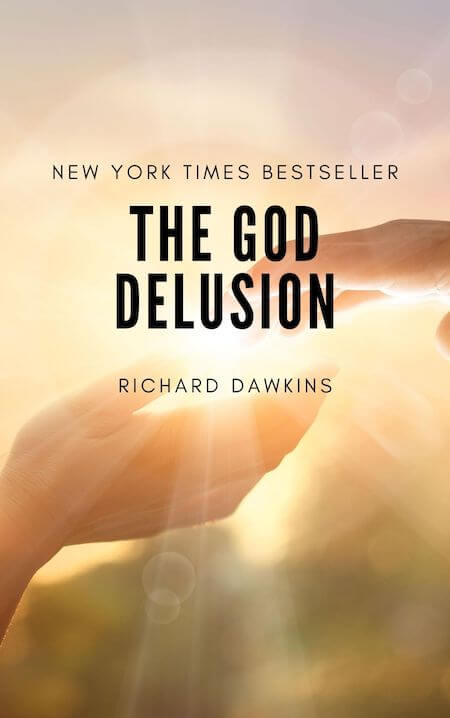
The God Delusion Book Summary
This The God Delusion Book Summary covers the key ideas, lessons, and takeaways in about 20 minutes.
Want the complete 20-minute summary?
- Full structured summary
- Video Summary
- Podcast Summary
- Audio summary
- Key takeaways
- Exercises
- Quiz
- Highlights and notes
- Ask the book with AI
What is in the The God Delusion book summary?
Below is a preview of Sumizeit’s expert-written summary of The God Delusion by Richard Dawkins. The full summary covers the book’s key ideas in text, audio, and video.
In The God Delusion, Richard Dawkins disproves the most popular arguments in defense of religion to prove that religion is not logical and does not serve our advancement as a species. Dawkins takes on the idea of intelligent design, the moral necessity of religion, and critiques the privileged position of religious institutions in modern society. He also pokes holes in the supposedly historical information in the Bible, to prove it is not a reliable document.
There are no persuasive arguments in favor of the existence of God; the scriptures themselves are full of contradictions that disprove the existence of God.
Medieval philosophers passed down two widely accepted arguments for God’s existence. Neither of these arguments is persuasive because there are holes in the logic.
Thomas Aquinas took a cosmological stance, arguing that God must exist because at one point there was no matter in the universe. As such, there must have been a First Cause that brought matter into being. He believes this First Cause is God. This argument is fundamentally flawed because it does not explain how the First Cause (God) came into being. This argument has the same flaw as the “chicken and the egg” argument – it assumes that God appeared out of thin air to create the world.
Anselm of Canterbury made an argument for God based on the idea that God is perfect. The basic idea is that any perfect being must exist in the real world, or it wouldn’t be perfect. This logic is circular and assumes that existence is a quality in and of itself. David Hume and Immanuel Kant disproved Anselm by proving that a perfect being can exist only in the imagination.
Similar logical fallacies and contradictions exist in the scriptures themselves. Very little of the original Biblical text exists because scribes have been copying and rewriting the book for centuries. The book was written long after the death of Jesus, and nobody knows the true author of the four gospels. The gospels themselves were chosen randomly from a larger pool of texts, suggesting the original compiler of the Bible was more interested in storytelling than preserving the historical records.
Beyond these foundational problems, the scriptures themselves are full of inconsistent information. Jesus was apparently born in Bethlehem because Augustus ordered a census that forced Joseph to travel to the city. That census didn’t occur until AD 9, many years of Jesus’s supposed birth. And while Matthew and Luke say Jesus was born in Bethlehem, John says that he was not.
Both the Bible and Christianity’s foundational proofs are deeply flawed and contradictory and as such not reliable evidence to prove the existence of God.
Insistence on faith in God is a widely accepted and privileged position in most societies, even though it can easily be disproven by science.
Even though faith in God has no logical or scientific backing, faith in God is a privileged position in modern society.
Want the complete 20-minute summary?
- Full structured summary
- Video Summary
- Podcast Summary
- Audio summary
- Key takeaways
- Exercises
- Quiz
- Highlights and notes
- Ask the book with AI
Who should read The God Delusion?
The God Delusion is for skeptics, critical thinkers, and anyone questioning the logical foundations of religious belief. Whether you're a committed atheist, a person of faith wrestling with doubts, or simply curious about the intersection of science and spirituality, this book challenges you to examine the arguments used to defend God's existence.
Why does The God Delusion matter?
In an era where religious institutions wield significant political and social influence, The God Delusion remains vital for understanding how faith operates in modern society and why scientific reasoning matters. Richard Dawkins makes the case that society has given religion an undeserved privileged position, shielding it from the scrutiny applied to other belief systems and ideologies.
What are the key themes in The God Delusion?
- Logical fallacies in classical arguments for God's existence
- Religious privilege and immunity from criticism in modern society
- Religion as an evolutionary by-product rather than divine truth
- The evolutionary basis of morality independent of religious teaching
- Biblical contradictions and historical unreliability
- The danger of blind obedience to authority
- Evolutionary mismatch between ancient religious morality and modern ethics
What are the key lessons from the The God Delusion book summary?
The Cosmological Argument Fails
Thomas Aquinas's argument that God must exist as a First Cause collapses under scrutiny because it doesn't explain how God itself came into being, creating the same circular logic as the chicken-and-egg problem.
The Ontological Argument Is Circular
Anselm's claim that a perfect being must exist in reality is logically flawed because it treats existence as a quality; philosophers like Hume and Kant proved a perfect being can exist only in imagination.
The Bible Is Not a Reliable Historical Document
Centuries of recopying, rewriting, and anonymous authorship have corrupted the original biblical texts, and the gospels were selected arbitrarily from a larger pool, suggesting compilation driven by storytelling rather than historical accuracy.
Biblical Contradictions Undermine Its Authority
The gospels contradict each other on basic facts—including where Jesus was born and the timing of the census—making the Bible an unreliable foundation for faith.
Religion Receives Unwarranted Social Protection
While political and scientific beliefs face open criticism, religious beliefs are shielded from similar scrutiny, treated as beyond legitimate questioning in ways other ideologies are not.
Evolution Explains Religion's Persistence
Religion evolved as a by-product of our need to obey authority figures—beneficial for child survival but dangerous when extended to blind obedience to potentially harmful leaders.
Morality Predates and Outlives Religion
Our capacity for goodness evolved from genetic self-interest and reciprocal cooperation, not from divine commandment, explaining why secular societies maintain functional moral codes.
Kin Selection Drives Our Moral Impulses
We naturally support family members because they share our genetic code, making altruism toward kin a self-serving evolutionary strategy rather than a religious virtue.
Symbiosis Explains Cooperation Beyond Family
Human cooperation and mutual benefit operate like ecological symbiosis—we help each other because interdependence increases everyone's survival chances, not because scripture demands it.
Immoral Behavior Has Natural Consequences
Those who refuse to reciprocate or contribute to their community face isolation and reduced reproductive success, naturally incentivizing ethical behavior without divine punishment.
Modern Morality Cannot Be Anchored to Ancient Scripture
Using a 2,000-year-old text as a moral foundation is incompatible with rapidly evolving social values and justice standards.
Selective Biblical Morality Is Incoherent
Taking some biblical stories literally while treating others as symbolic and ignoring the rest is arbitrary and undermines any coherent moral system based on scripture.
Moral Progress Requires Abandoning Religious Foundations
Societies advance morally not by adhering to ancient religious texts but by developing codes responsive to contemporary human needs and scientific understanding.
Evolutionary Mismatch Explains Religious Harm
Like moths drawn to artificial light, humans evolved to obey authority but now blindly follow religious leaders in contexts where that obedience causes harm.
Religion Persists Through Cultural Transmission
Religious belief spreads like genes through generations, indoctrinating children before they can critically evaluate the claims, ensuring persistence despite lack of evidence.
Faith Cannot Answer Logical Objections
Arguments for God's existence crumble under logical examination, leaving faith as an appeal to emotion and authority rather than reason.
Religious Institutions Demand Unwarranted Respect
Society grants religious beliefs immunity from the critical analysis we apply to science and politics, distorting public discourse and policy.
The Bible Contains Deeply Immoral Teachings
Taken literally, the Bible endorses practices—including slavery, genocide, and sexual violence—that modern morality unanimously rejects, exposing the danger of treating it as a moral guide.
Tribal Conflict Stems From Religious Division
Religious group identity, reinforced by evolutionary psychology, has historically driven tribal warfare and sectarian violence, making religion a net negative for human welfare.
Secular Reasoning Provides Superior Moral Guidance
Ethics grounded in reason, science, and human welfare offer more consistent and progressive moral frameworks than those dependent on ancient religious texts.
Want the complete 20-minute summary?
- Full structured summary
- Video Summary
- Podcast Summary
- Audio summary
- Key takeaways
- Exercises
- Quiz
- Highlights and notes
- Ask the book with AI
How can you apply ideas from The God Delusion?
- Evaluate religious claims you encounter using the same logical scrutiny you apply to other belief systems, looking for circular reasoning and unfounded assumptions
- Challenge the social assumption that religious beliefs deserve automatic respect and immunity from criticism—apply consistent standards across all worldviews
- Base personal moral decisions on contemporary ethical reasoning and scientific understanding of human flourishing rather than literal biblical interpretation
- Recognize when you or others are using selective morality—choosing which religious teachings to follow literally and which to ignore—and question what makes that selection coherent
- Examine authority figures critically rather than accepting directives blindly, resisting the evolutionary impulse to defer to leaders without evaluation
- Develop secular sources of meaning, community, and moral purpose that don't require supernatural claims or ancient texts
- Advocate for secular ethics in education and public policy, grounding societal values in reason and human welfare rather than religious doctrine
What common mistakes do readers make with The God Delusion?
- Assuming that because religion is widespread or comforting, it must be true—popularity and emotional appeal are not evidence
- Treating religious criticism as inherently disrespectful or bigoted when you would accept similar scrutiny of political or scientific claims
- Accepting that 'faith' is a virtue when it requires suspending the critical thinking you apply elsewhere in life
- Believing that morality requires a religious foundation, when evolutionary psychology and cultural evolution better explain our capacity for cooperation and ethics
Sumizeit Exercises Apply what you've learned
Turn ideas from The God Delusion into action with a short guided reflection: identify the biggest takeaway, connect it to your life, and commit to one step you can take in the next 24 hours.
What is the expert analysis of The God Delusion?
Overview
The God Delusion is a provocative and influential work by Richard Dawkins, a renowned evolutionary biologist and outspoken atheist. Published in 2006, the book challenges the rationality and utility of religious belief, positioning itself as a cornerstone in contemporary debates about science, religion, and morality. Dawkins, well-known for his contributions to evolutionary theory and public understanding of science, leverages his expertise to critique religion from philosophical, scientific, and historical perspectives. The book’s significance lies not only in its rigorous argumentation but also in its cultural impact, sparking widespread discussion and controversy about the role of religion in modern society.
Core Thesis
Dawkins’ central argument is that belief in God is both logically unfounded and evolutionarily unnecessary. He contends that traditional proofs for God's existence—such as the cosmological and ontological arguments—are flawed and circular. Moreover, he asserts that religious scriptures are historically unreliable and morally outdated. Religion, according to Dawkins, is an evolutionary by-product: a cultural meme that emerged to promote obedience and social cohesion but now often impedes human progress. Importantly, Dawkins argues that morality is innate and biologically rooted rather than divinely ordained, and that ethical behavior can and should be grounded in secular, rational principles rather than ancient religious texts.
Strengths
- Interdisciplinary Rigor: Dawkins integrates philosophy, evolutionary biology, history, and sociology to build a multifaceted critique of religion, demonstrating intellectual breadth and depth.
- Clarity and Accessibility: Despite complex subject matter, the book is written in a clear, engaging style that makes sophisticated arguments accessible to a broad audience.
- Historical and Logical Analysis: The detailed examination of classical theological arguments and biblical inconsistencies offers a compelling case for skepticism about religious claims.
- Provocation of Public Discourse: The book revitalized public debate on atheism and secularism, encouraging critical examination of deeply held beliefs and the social privileges afforded to religion.
- Evolutionary Perspective on Morality: By grounding ethics in evolutionary biology, Dawkins provides a naturalistic framework for understanding human cooperation and altruism without recourse to supernatural explanations.
Critiques & Counterarguments
- Overgeneralization of Religion: Dawkins tends to treat religion monolithically, often overlooking the diversity and complexity of religious experiences and traditions, some of which embrace metaphorical interpretation and progressive moral reasoning.
- Reductionism in Evolutionary Explanation: The portrayal of religion solely as an evolutionary by-product may understate its multifaceted social, psychological, and cultural functions, which extend beyond obedience and authority.
- Philosophical Pushback: Critics from the philosophy of religion argue that Dawkins’ dismissal of theological arguments sometimes lacks engagement with more sophisticated contemporary defenses of faith, such as those addressing metaphysical nuances or experiential dimensions.
- Empirical Challenges: Sociological research suggests that religion can play complex roles in community building, mental health, and ethical motivation, which Dawkins’ evolutionary framework may insufficiently address.
- Ethical Implications: Some ethicists caution that removing religion as a moral foundation does not automatically yield a universally accepted secular morality, raising questions about the practical implementation of Dawkins’ vision.
Who Should Read This
The God Delusion is essential reading for intellectually curious individuals interested in the intersection of science, philosophy, and religion. It is particularly suited for readers who appreciate rigorous critique of established norms and are open to challenging deeply ingrained beliefs. Scholars and students of religious studies, philosophy, evolutionary biology, and ethics will find Dawkins’ arguments a valuable stimulus for debate. Additionally, secularists and atheists seeking articulate defenses of their worldview will find affirmation, while believers open to critical reflection may gain insight into the scientific and philosophical challenges to faith.
Frequently asked questions about the The God Delusion book summary
What is The God Delusion about?
The God Delusion by Richard Dawkins is a philosophical critique of belief in God that dismantles classical arguments for divine existence and examines religion's role in modern society. The book argues that religion is an evolutionary by-product, that morality does not require religious foundations, and that society has wrongly granted religion a privileged position immune from the scrutiny applied to other belief systems.
Who should read The God Delusion?
The God Delusion appeals to critical thinkers, skeptics, and anyone interested in the logical foundations of religious belief. It's valuable for atheists seeking intellectual reinforcement, religious individuals questioning their faith, and those curious about how evolutionary biology and reason apply to questions of meaning and morality.
What are the main takeaways from The God Delusion?
The main takeaways are: (1) arguments for God's existence fail on logical grounds, (2) biblical texts are historically unreliable and internally contradictory, (3) morality evolved independently of religion and should evolve with contemporary values, (4) religion persists through cultural transmission and the exploitation of our tendency to obey authority, and (5) society wrongly shields religious beliefs from the critical scrutiny applied to other ideologies.
Does Dawkins claim God definitely does not exist?
Dawkins argues that the burden of proof lies with those claiming God exists, and existing arguments for God's existence are logically flawed. He positions himself as an agnostic atheist—acknowledging we cannot prove God's absolute nonexistence but finding the evidence for belief insufficient. The book focuses on dismantling the intellectual case for theism rather than claiming absolute certainty about God's nonexistence.
How does Dawkins explain the prevalence of religion?
Dawkins explains religion as a by-product of evolution—specifically, our evolved tendency to obey authority figures, which was beneficial for child survival. Religion persists because it's transmitted culturally through generations, often to children before they develop critical thinking skills, similar to how genes pass through families.
Can we be moral without religion according to The God Delusion?
Yes, according to Dawkins, morality evolved from genetic self-interest, kin selection, and reciprocal cooperation—all rooted in evolutionary advantage rather than divine command. He argues that secular societies maintain functional moral codes, and morality is better grounded in contemporary ethical reasoning and human welfare than in ancient religious texts.
What does Dawkins say about biblical reliability?
Dawkins argues that the Bible is not a reliable historical document due to centuries of recopying and rewriting by anonymous scribes, contradictions between gospels on basic facts, and the arbitrary selection of texts included in the final compilation. He notes that the gospels were written long after Jesus's death by unknown authors, undermining their credibility as historical records.
What is Dawkins's main criticism of religious privilege in society?
Dawkins argues that religious beliefs receive unwarranted immunity from criticism compared to political and scientific ideologies. While Republicans and liberals face mockery for their beliefs, cartoons depicting religious figures spark outrage and violence, and religious influence on healthcare and personal freedoms goes largely unchallenged—a double standard Dawkins sees as damaging to social progress.
About Sumizeit
Sumizeit is a profitable Scomy LLC company based in Miami, Florida. It has been helping readers learn from nonfiction books for 7 years with expert-written summaries in text, audio, podcast, and video.
Want the complete 20-minute summary?
- Full structured summary
- Video Summary
- Podcast Summary
- Audio summary
- Key takeaways
- Exercises
- Quiz
- Highlights and notes
- Ask the book with AI
Here's why readers love Sumizeit
Join thousands of learners getting smarter every day
"Great experience. Detailed summaries. Loved the gamification feature. Makes learning fun. Good customer service. I recommend Sumizeit to anyone. You'll learn a lot."
"I always felt busy but still wanting to keep up with the book discussion in my friend group. This was a great supplement to help me keep reading the books I find fun while keeping up with important books."
"I love this website. Instead of scrolling social media, I find myself learning a lot. I use it everyday. I recommend this app for anyone who is too busy and wants to get up to speed with their favorite books."
The God Delusion Book Summary PDF
Looking for a The God Delusion Book Summary PDF you can save and revisit offline? Our The God Delusion Book Summary PDF captures the book’s core ideas in a clean, printable format — the key frameworks, takeaways, and structure without the fluff. Download the The God Delusion Book Summary PDF when you want a reference you can annotate, share with your team, or review on the go. Get your The God Delusion Book Summary PDF from the download page below.
Download The God Delusion Book Summary PDFPeople also liked these summaries
Readers who explored The God Delusion often enjoyed these titles next.




Want the complete 20-minute summary?
- Full structured summary
- Video Summary
- Podcast Summary
- Audio summary
- Key takeaways
- Exercises
- Quiz
- Highlights and notes
- Ask the book with AI
Featured Book Titles
Popular Book Summaries at sumizeit, leading book summary app
